Food Labels vs. Food-Grade Labels: A Crucial Distinction for Packaging Safety
When it comes to packaging food products, not all labels are created equal. One of the most important distinctions that brands, marketers, and procurement teams must understand is the difference between food labels and food-grade labels. Misunderstanding this difference can lead to compliance issues, consumer safety risks, or costly redesigns. Let’s break it down.
What Is a Food Label?
A food label generally refers to any label that appears on a food product or its packaging. These are what consumers read in the grocery aisle—ingredient lists, branding, nutrition facts, and expiration dates. These labels can be safely applied to the outside of packaging materials like jars, cartons, clamshells, or bags. However, these are not necessarily food-grade or safe for direct contact with the food itself.
What Is a Food-Grade Label?
A food-grade label refers to a label constructed with materials—including adhesive, facestock, and liner—that are safe for direct food contact as defined by regulatory agencies like the FDA. These labels are used in applications where the label might touch the actual edible portion of the food. Think of stickers on apples, or labels inside clear packaging meant to be visible through the product.
Most Labels Are Not Meant for Direct Contact
While many pressure-sensitive labels and flexible packaging solutions are safe and compliant when applied externally, they are not approved for direct contact with food. This is especially important when designing packaging that may include internal labeling.
One of our clients once requested a label to be applied to the inside of a food container so that branding and messaging would be visible when the container was opened.After evaluating the inks, laminates, and adhesives required, we had to reject the project. The materials involved were not certified for direct food contact, and we refused to compromise on safety.
Adhesives and Inks: Not All Are Food Safe
Some packaging does require direct food contact materials, like:
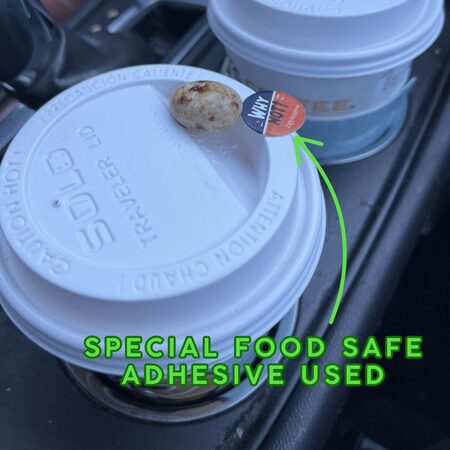
In these cases, special adhesives and certified materials must be used. However, even when using food-safe adhesives, it’s important to know that inks and printed layers are almost never approved for direct food contact. Only the unprinted, food-contact side of a material is considered safe.
So if you’re thinking of placing a printed label directly onto food (like meat, cheese, or confections), stop right there and consult your label supplier. It’s not just about sticking something on—it’s about compliance, safety, and preserving product integrity.
Use Case: Produce Labels
There are exceptions where a food-contact adhesive is not required, such as with produce like watermelons or bananas. Why? Because consumers typically do not eat the rind or peel, making the risk of contamination negligible. These labels are considered safe under qualified indirect contact regulations.
However, even in these cases, proper removal and disposal should be easy and clean to avoid any consumer dissatisfaction.
What About Smells from Label Materials?
Another question we sometimes hear from clients is: “This label has a bit of a chemical smell—is it safe for food packaging?” The answer is: yes, in external applications. As long as the label does not make direct contact with the food item, any odor from adhesives or inks will not impact the safety, taste, or aroma of the food inside. Labels used on jars, boxes, wrappers, and pouches are designed to perform safely without migrating into the product. This even extends to things like single use pouches and stick packs. The substrate itself is approved for direct food contact and therefore the inside of the stick pack is good to go, even if the external inks have any type of smell, the chemicals from the inks will not migrate into the product inside.
Be Clear with Your Label Printer
If there is any chance your label will touch a food item you must disclose that to your label printer. Not all adhesives are food safe, and not all label constructions are suitable for direct or indirect food contact. Qualified printers can guide you to safe alternatives, such as:
FDA-approved adhesives
Food-contact safe facestocks
Laminates and coatings designed for indirect or incidental contact
Being transparent about your application avoids costly mistakes, failed audits, or product recalls.
Final Takeaway
Understanding the difference between food labels and food-grade labels is not just about semantics—it’s about ensuring the safety and compliance of your product. From special adhesives to indirect contact rules, the materials you choose matter. Always work with a knowledgeable label partner who can help you navigate the details and provide the right solutions for your specific needs.
Your product deserves packaging that looks great and protects your customer. At Columbine Label, we’re here to make sure it does both.